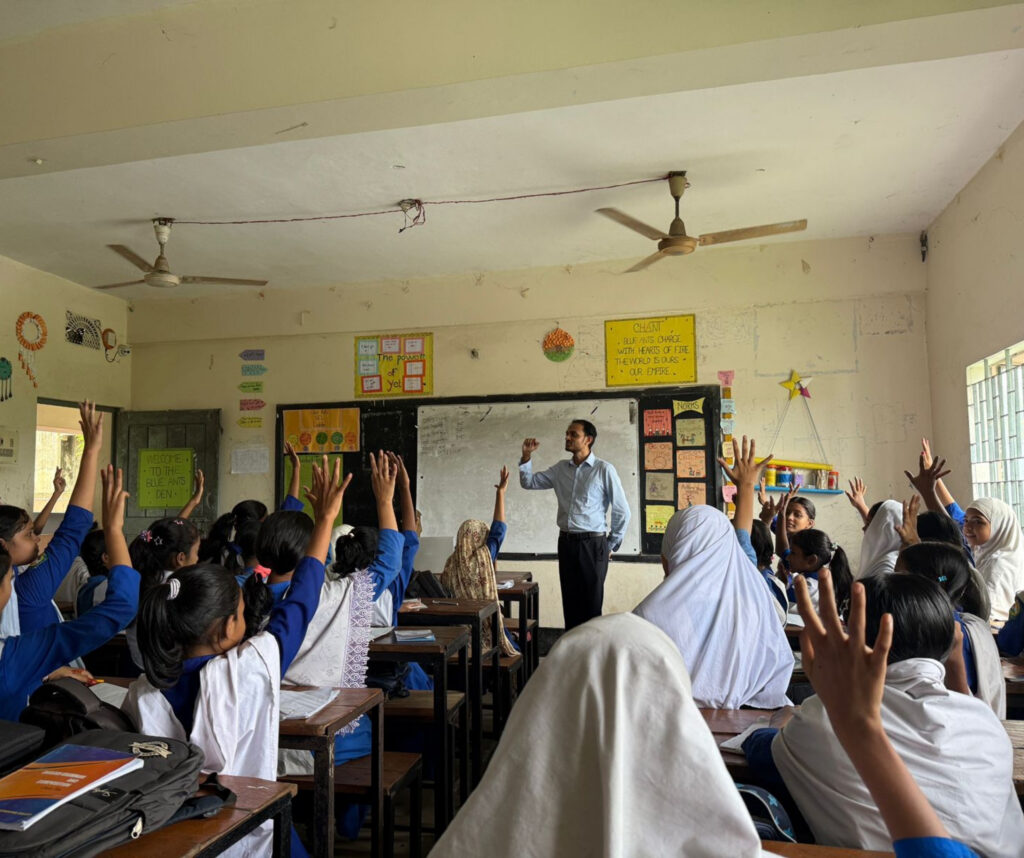
If we pick up any textbooks from today’s NCTB curriculum to look for lessons regarding the causes of climate change and ways to address it, we will likely find many chapters across the paperbacks. As students, we often flipped through pages and implemented simple actions such as finding the nearest trash can to dispose of plastic on an open road, starting a conversation with a friend about why winter has been late in recent years, or realizing that we are part of an alarming crisis. As for the sixth-grade students of Muhammad Kamal Uddin High School, they are examining the problem closely, taking the accurate measurements to the best of their abilities, and needless to say, they are part of the solution. Let’s take a look at what they have done in the past few days in their school premise.
On August 5th, they had the opportunity to attend interactive learning sessions on how plastic waste pollutes ponds, reduces fish populations, and harms the environment. They are witnessing these problems in their community every day. These sessions were taken by experts from the Department of Agricultural Extension (DAE). They did sit through lectures and took notes, and also took it up a notch by running across school premises planting trees, building stories on different crises that they played in as characters, having constructive arguments with each other on related topics, participating in rallies, and so on. They learnt about organic waste and made compost from it on the same day. Now that sounds productive and fun, right? They concluded this amazing day by making a booklet “আমার পৃথিবী, আমার প্রয়াস” , a practical guide that reflects their experience on learning and actions.
The content of the booklet walks readers through key topics such as the difference between organic and inorganic waste, how to compost at home, the importance of the 3Rs (Reduce, Reuse, Recycle), and building small habits that lead to big environmental changes. Rooted in the UN’s Sustainable Development Goals, the booklet aligns directly with SDG 13 (Climate Action), SDG 11 (Sustainable Cities and Communities), and SDG 4 (Quality Education). It concludes with a powerful section on self-reflection and peer messages. Through this initiative, students are not only learning about the climate crisis but are becoming active contributors in addressing it.
Writing on their experience as a third-person witness, I wonder what lessons they learnt that they will take with them in their future endeavors, if they would do it again, what they would do if they want to continue their journey of learning about environment, and so many more. But looking at their bright eyes full of optimism for collective success, we can see that green can begin in the classroom and ripple out into the community.