
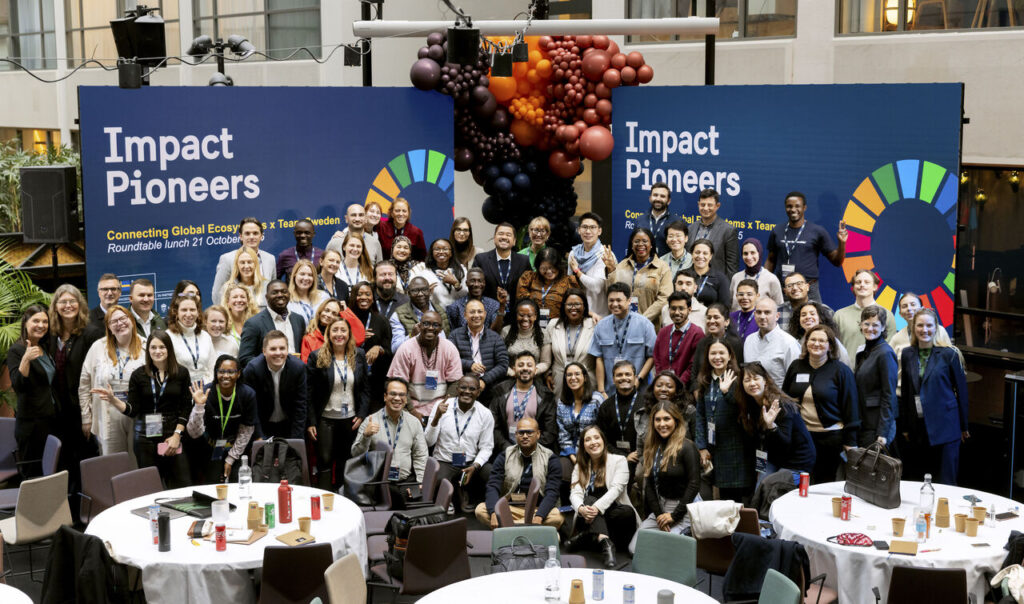
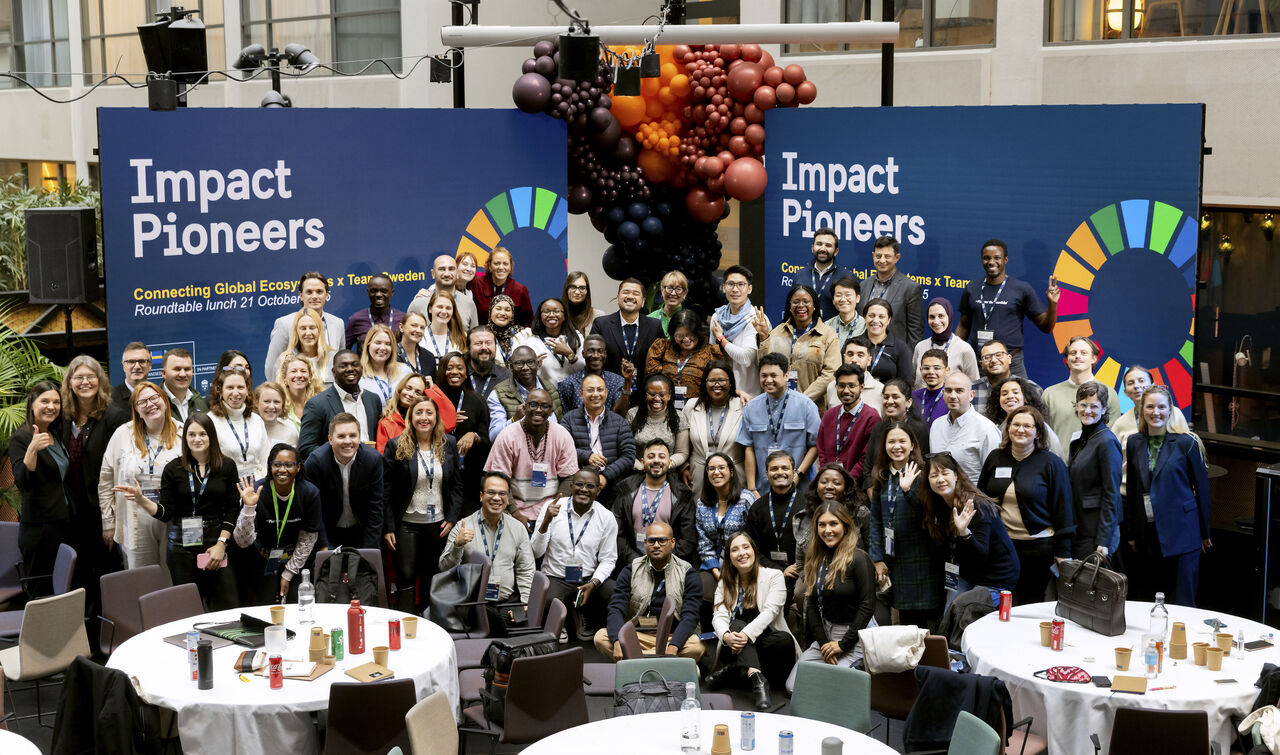
Last October, I spent six days in Stockholm as part of Impact Pioneers ’25, a leadership programme organised by the Swedish Institute, in partnership with the Embassy of Sweden, and supported by VINNOVA, Sida, Swedfund, Norrsken, STING, KTH, and Swedish Incubators & Science Parks. The programme brought together entrepreneurs, innovators, and changemakers from 26 countries around a shared focus: enabling climate tech entrepreneurship.
I want to share a few reflections from that week, and from what has happened since I returned home.
Before the Programme Even Started
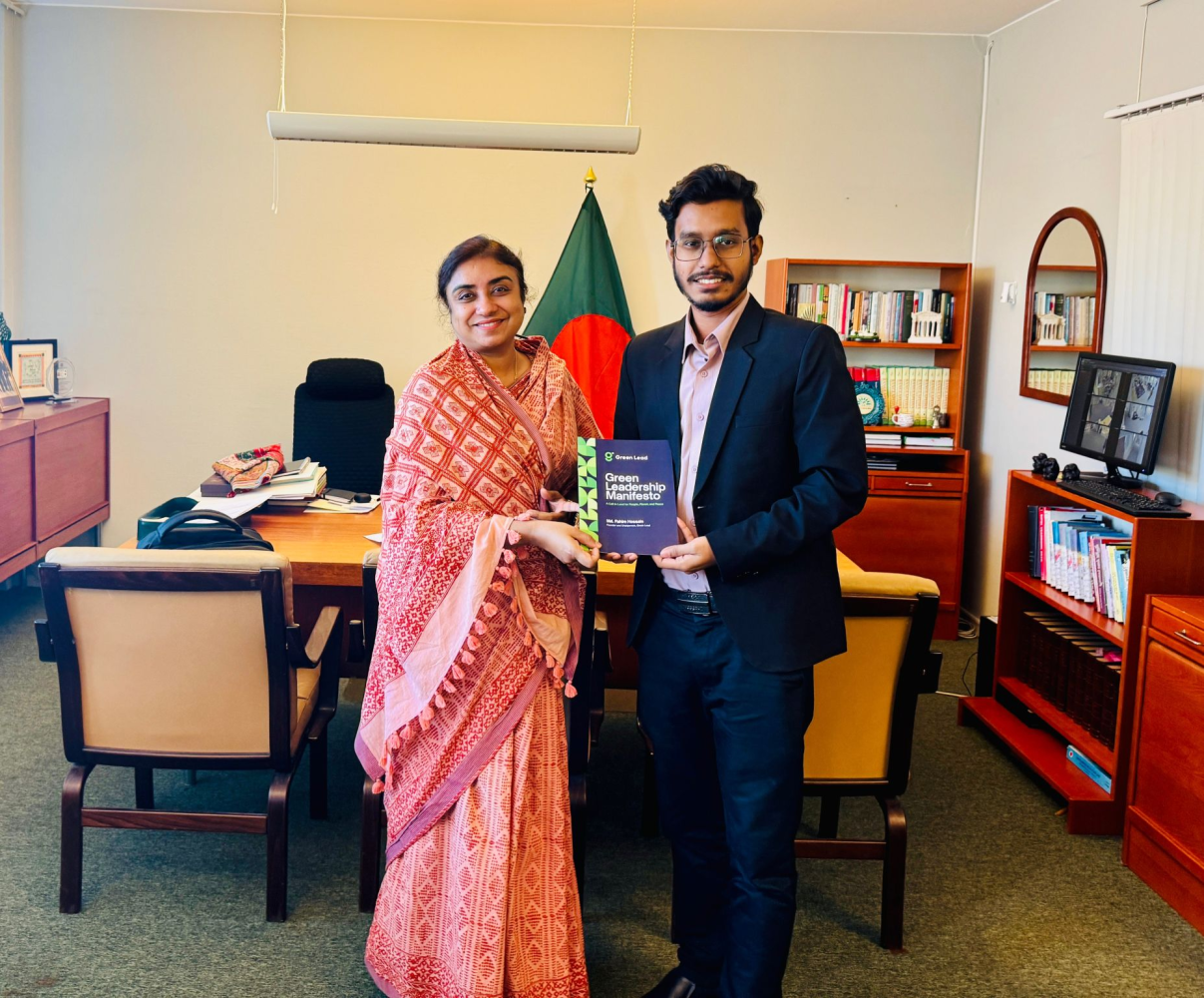
My first day in Stockholm set an unexpected but meaningful tone. Before the official kickoff, I had the opportunity to have a courtesy meeting H.E. Ambassador Wahida Ahamed at the Embassy of Bangladesh in Stockholm. I shared our mission at Green Lead in bringing change within Bangladesh and the journey that brought me to the room.
It was a good reminder that the conversations around climate and sustainability are happening across many different rooms. Diplomacy and climate leadership are more connected than they often appear, and that meeting helped me walk into the rest of the week with a clearer sense of why the work matters.
A Week Inside Sweden’s Climate Ecosystem
The programme was thoughtfully structured. Rather than sitting in lectures, we spent most of the week inside institutions that are actively shaping Sweden’s climate innovation landscape.
At Epicenter Stockholm, we met representatives from Swedish government agencies working on international collaboration in entrepreneurship and innovation. What I found most interesting is how innovation and economic development are driven by the collaborative interaction of three key spheres- academia (universities), industry (companies), and government known as the Triple Helix model.
Norrsken House, Stockholm’s largest hub for impact startups, was another highlight. Walking through a space where over 400 entrepreneurs, investors, and changemakers are working on global challenges in the same building gave me a sense of what a concentrated, purpose-driven community looks like in practice. It is the kind of infrastructure that does not happen by accident.
At STING, one of the world’s leading startup incubators, the session was less about what they had built and more about how they think about building climate entrepreneurs. Their approach goes well beyond funding – it is about developing founders over time. That distinction stayed with me, and I kept thinking about what Green Lead could learn from it for our context in Bangladesh. The workshop with KTH Innovation on the Innovation Readiness Level (IRL) framework added a practical tool to that thinking.
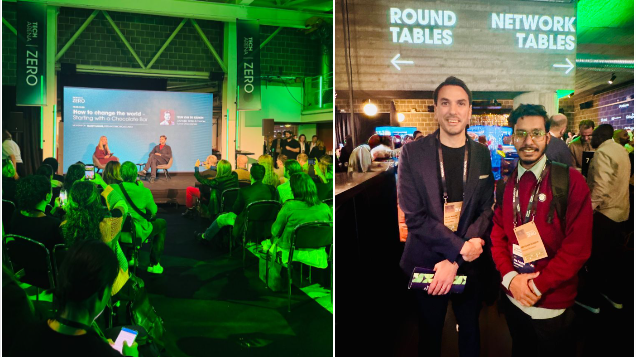
We also spent a full day at Techarena Zero, which brought together business leaders, entrepreneurs, and policymakers around the theme of driving sustainable business solutions. The sessions on circular economy, AI, and leadership were genuinely engaging, and I had several conversations that pushed my thinking – including one with Omid Ekhlasi that I found particularly worthwhile.
Launching the Green Leadership Manifesto
At the Swedish National Museum of Science and Technology, I launched the Green Leadership Manifesto, including the Green Leadership in Action (GLiA) framework, with the full programme cohort. Sharing this work in front of peers from 26 countries, after a week of real conversations about what climate leadership actually requires, felt significant.
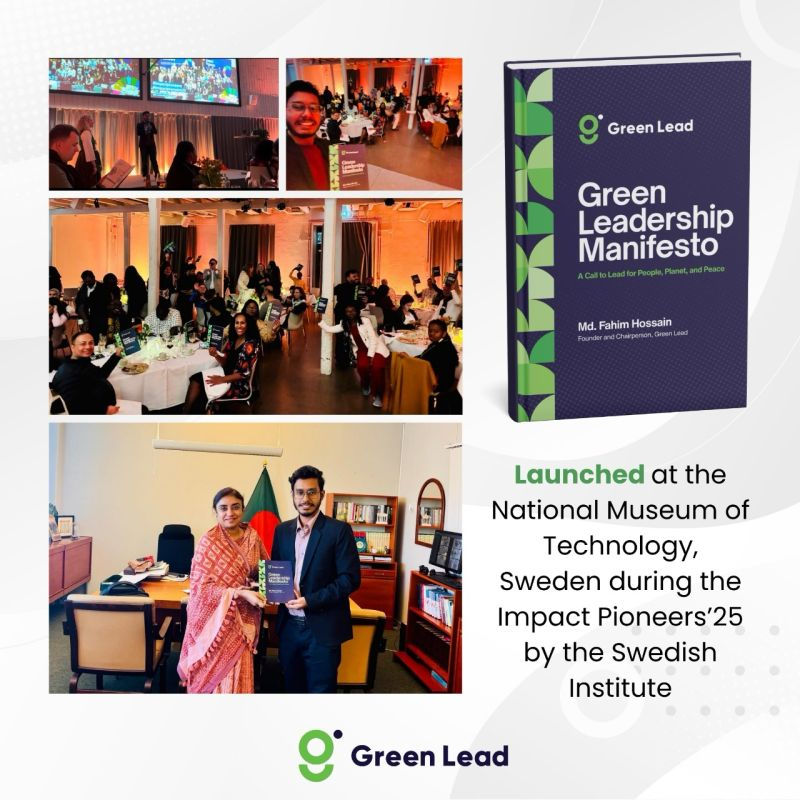
The GLiA framework is grounded in a straightforward conviction: climate crisis is a leadership crisis and we need a paradigm shift. The leadership in the Global South cannot simply adopt models designed for different contexts. It has to be shaped by the communities it is meant to serve, and it has to account for the realities on the ground. The reception from the cohort was encouraging and the conversation it opened was honest and substantive. The Manifesto can be accessed here: https://greenleadglobal.org/green-leadership/
What the Network Actually Means
One of the things I appreciated most about Impact Pioneers ’25 was that it was designed around the cohort, not just the content.
The people I met that week – founders, researchers, advocates, educators from across the Global South and beyond – are not just contacts. They represent a community of people working on similar challenges from different angles. The conversations over dinner at Capital rooftop, at the mingle in Norrsken House, and during the quieter moments between sessions were often the most valuable ones.
The Swedish Institute seems to understand something that many programmes miss: knowledge transfer is only part of the value. The relationships that form when people share a week of real engagement are often what carry the work forward. That is a design choice, and it is a good one.
The Conversations Continued Back Home
Returning to Bangladesh, I was struck by how much the Stockholm experience kept generating momentum.
Shortly after getting back, I attended the Lucia Celebration hosted by the Swedish Embassy in Dhaka, where I met the H.E. Nicolas Weeks, Swedish Ambassador to Bangladesh. We talked about the programme and about what continued engagement between Sweden and Bangladesh on sustainability and innovation could look like.
That conversation led to a follow-up meeting with Mr. Olle Lundin, Head of Politics, Trade and Communications at the Embassy of Sweden in Bangladesh, where we continued that discussion further.
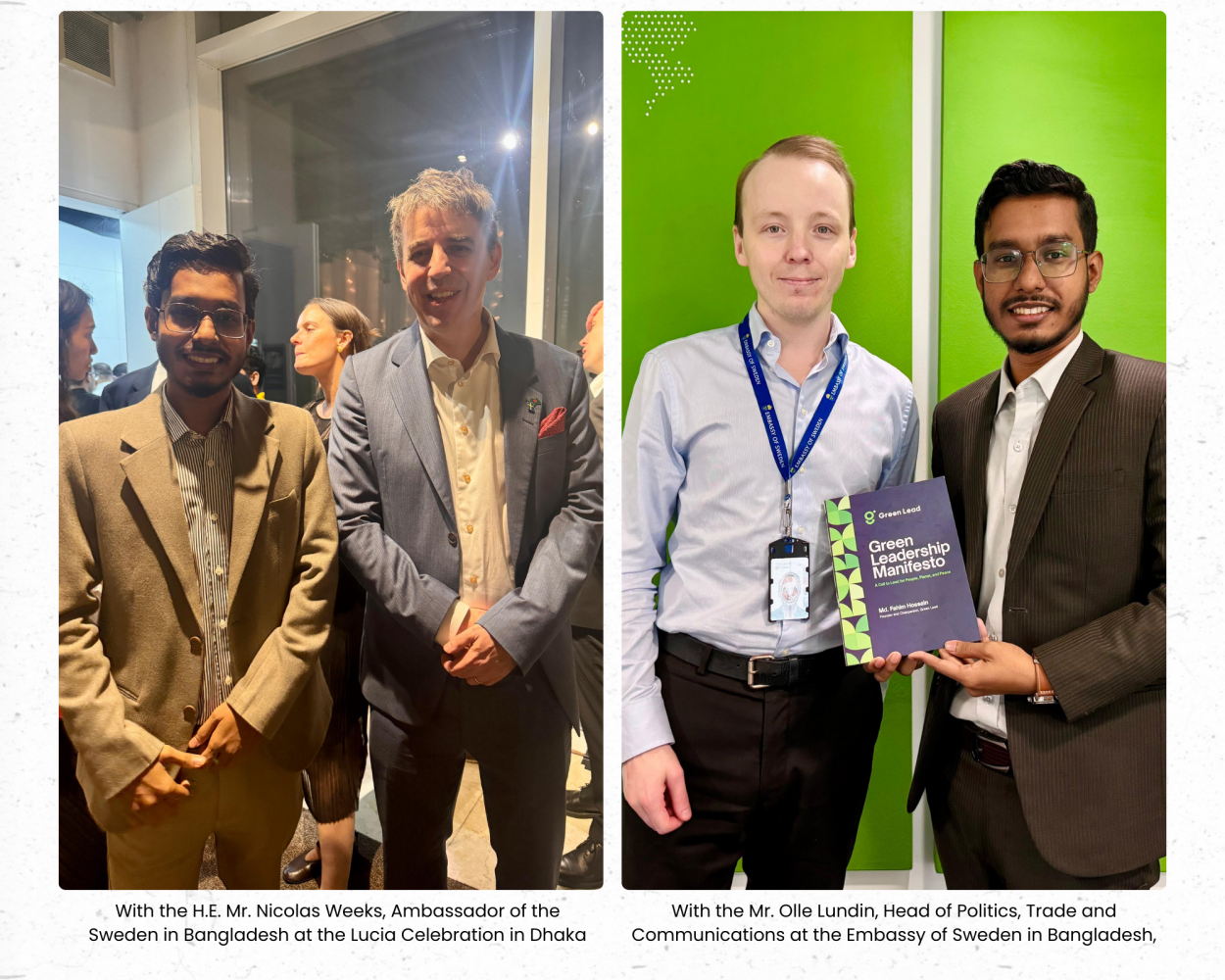
These follow-up conversations were not something I had planned. They happened because the week in Stockholm had created a thread worth following, and people on both sides were willing to pull on it.
Five Things I Am Taking Forward
1. Systems thinking before solution-building. What struck me about Sweden’s climate ecosystem is that it did not happen by accident – policy, capital, community, and research have been deliberately connected. So only trying to copy outcomes without understanding the system behind them will not get us far.
2. Global South perspectives belong in the room. The questions I brought from Bangladesh – about adaptation, resource constraints, informality – were not gaps to fill. They were contributions to a richer conversation and they were received that way.
3. Networks are a form of infrastructure. The relationships I built that week are as practically important as any framework or tool. They deserve to be maintained with the same seriousness.
4. Context shapes leadership. GLiA is not a universal formula. But the principle underneath it – we need a paradigm shift in leadership i.e. green leadership and it must come from and speak to the communities it serves.
5. The urgency is genuinely shared. Being in a room with people from Stockholm, Nairobi, Jakarta, and Casablanca, I felt that the concern about climate is not performative. People are working on this seriously from many different starting points.
The week closed with a line that has stayed with me: “Let’s pioneer the possible together.”
Back in Dhaka, that line still feels true. The conversations in Stockholm did not end in Stockholm. They showed up in follow up conversations, in the meeting at the Swedish Embassy, and in the mission we work for at Green Lead.
Md. Fahim Hossain is the Founder of Green Lead and the author of the Green Leadership Manifesto. He works at the intersection of climate leadership, youth empowerment, and sustainable development in Bangladesh and beyond.
If you are interested in the GLiA framework or in finding ways to collaborate, feel free to reach out at fahim@greenleadglobal.org and explore more at www.greenleadglobal.org